
Why Is One Side of My Face Fatter? 5 Types, Self-Test & How to Fix It
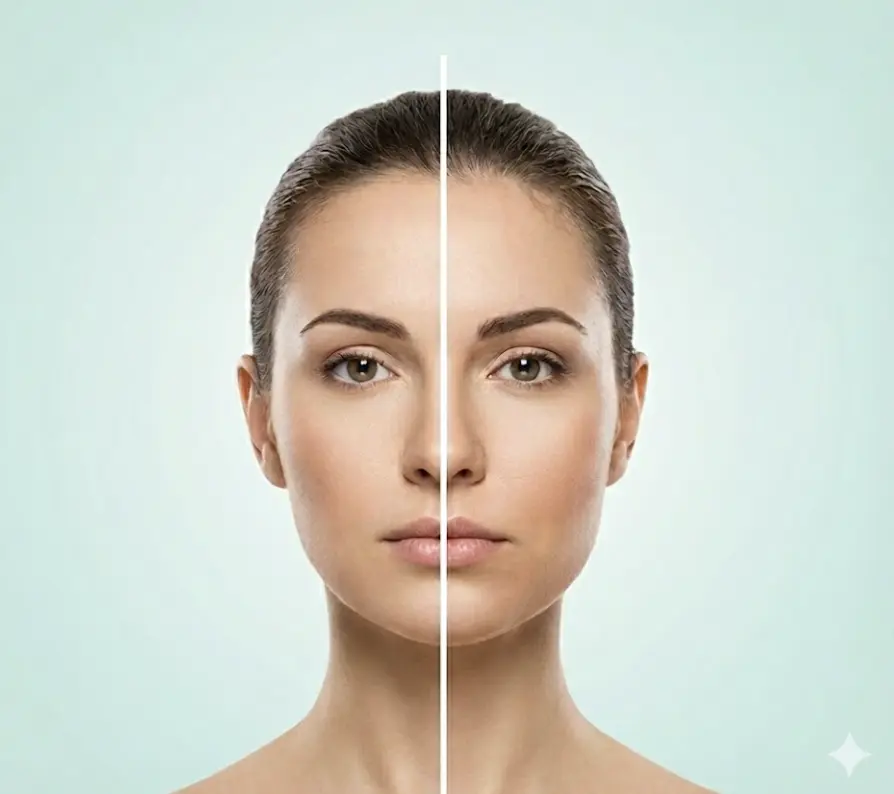
You're scrolling through your camera roll, and there it is — that selfie where one side of your face looks noticeably bigger than the other. You flip the photo. Now the other side looks weird. You take 47 more selfies. Delete all of them.
Sound familiar?
Maybe you've started angling your face in every photo. Maybe you only show your "good side" on video calls. Maybe you've gone down a rabbit hole of Google searches at 2 AM, reading about facial asymmetry and wondering if something is seriously wrong with you.
Here's what I want you to know: you're not alone, and you're probably not as asymmetrical as you think.
In this guide, I'll help you figure out whether your uneven face is real or just a camera trick. If it is real, I'll show you exactly what type you have and what to do about it. No fluff, no false promises — just a clear path from "why is one side of my face fatter" to "here's my action plan."
Is Your Face Really Uneven, or Is It Just Your Camera?
Before you spiral into facial asymmetry anxiety, let's talk about something most articles don't mention: your phone camera lies to you.
The Front Camera Distortion Trap
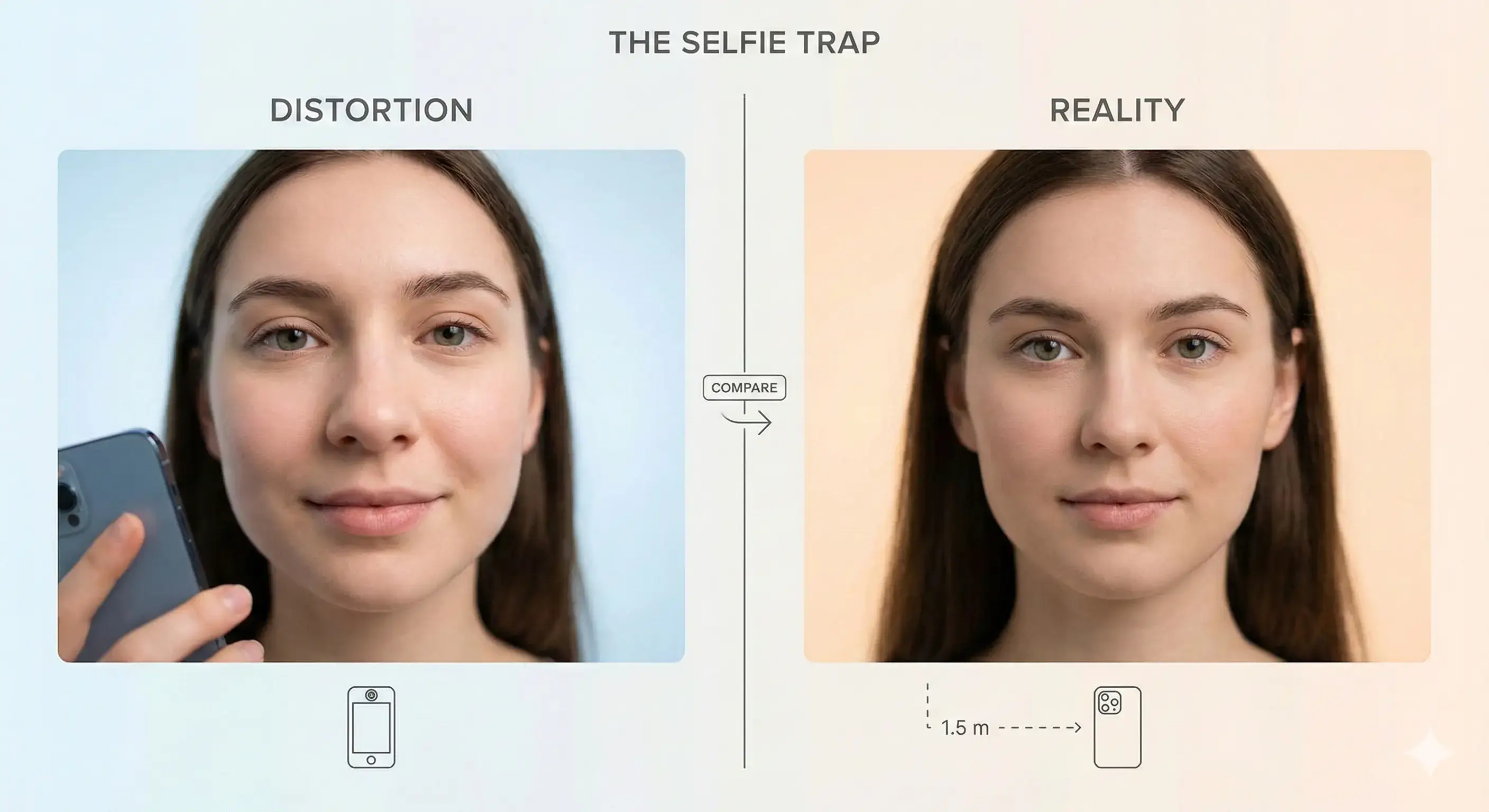
That selfie camera you use every day? It's a wide-angle lens — typically around 24-28mm. And wide-angle lenses distort whatever is closest to them.
Here's what that means in practice:
- The side of your face that's slightly closer to the camera looks bigger
- Your nose looks larger than it really is
- If you hold your phone even slightly to one side, the opposite cheek appears fuller
One Reddit user in r/TheGirlSurvivalGuide shared their experience:
Could maybe be the photography itself tho, the lighting, angle, shadow etc. if your friend said you dont look like the back cam picture and yet you find the picture brutal, it's probably just a bad picture. Dont be too hard on yourself !
Try this right now: Take a selfie with your phone tilted slightly to the right. Your left cheek will look bigger. Now tilt it to the left. Suddenly your right cheek is the "fat" one.
This isn't your face changing. It's lens distortion doing what lens distortion does.
Quick reality check: Ask someone to photograph you with the rear camera from about 1.5 meters (5 feet) away. Compare that photo to your usual selfies. The difference might surprise you.
The Mirror vs. Photo Mental Gap
There's another layer to this. You've spent your entire life looking at yourself in mirrors. But mirrors show you a flipped version — the left side of your face appears on the left side of the mirror.
Photos show the real, unflipped version. And your brain isn't used to it.
This is why almost everyone thinks they look "weird" in photos. It's not that you look bad. It's that you're seeing the version of yourself that everyone else sees, and it feels unfamiliar.
When It's Actually Real Asymmetry
Okay, but what if it's not just the camera?
Your asymmetry is likely real if:
- Multiple photo sources show the same thing — rear camera photos, pictures others take of you, photos from different angles all show the same side looking fuller
- You can feel it — when you touch both cheeks, one side feels thicker, softer, or has more muscle tension
- It's consistent — the same side always looks bigger, not just in certain photos
Want objective data instead of guessing? Upload a front-facing photo to a Face Symmetry Test. You'll get a symmetry percentage for each facial area — eyes, nose, cheeks, jawline — plus an overall score. It takes 30 seconds and tells you exactly which areas are uneven.
---5 Real Reasons One Cheek Is Bigger Than the Other
 If you've confirmed that your asymmetry is real, the next step is figuring out why. This matters because different causes need different solutions.
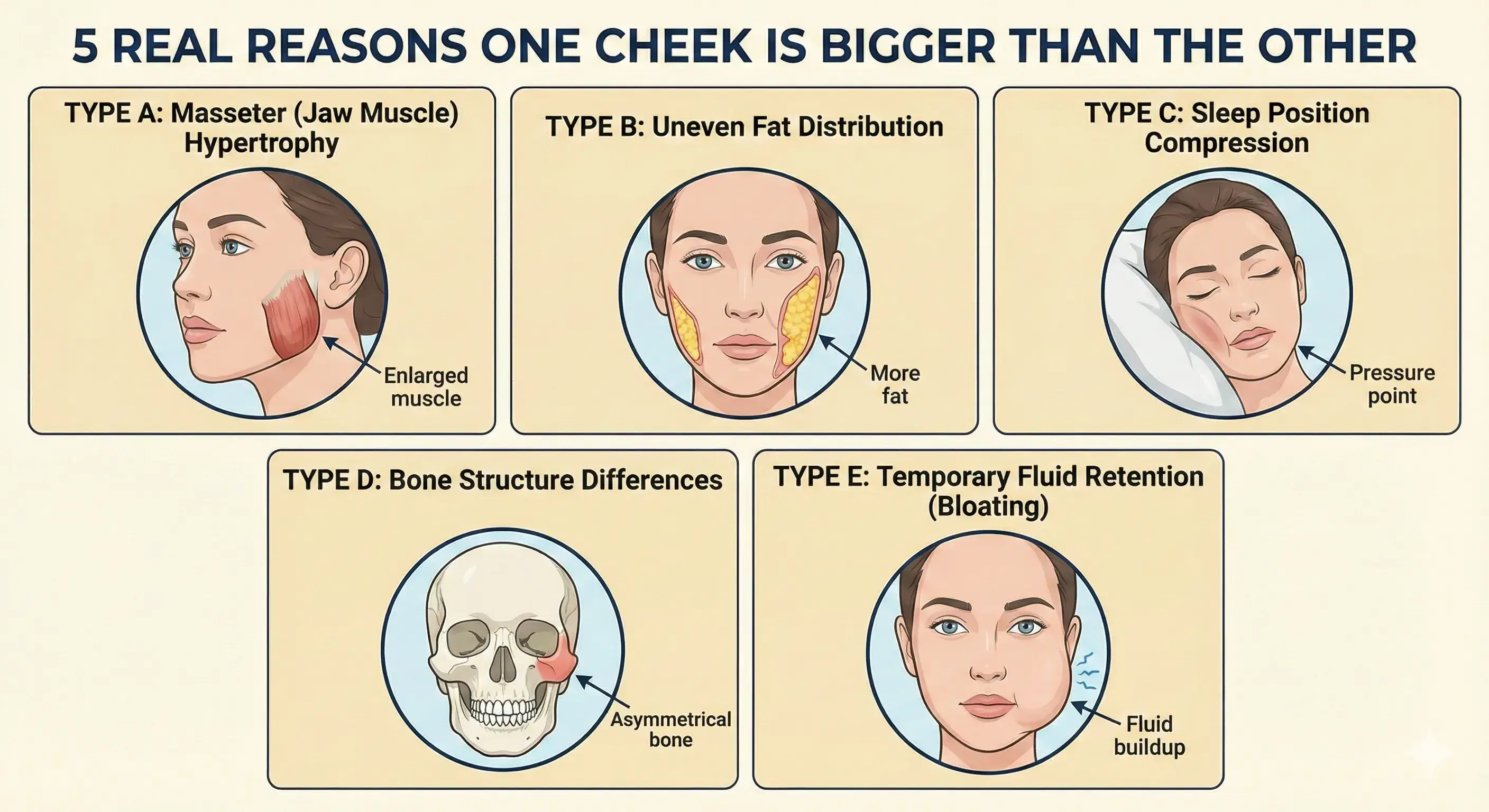
Here are the five most common types:
Type A: Masseter (Jaw Muscle) Hypertrophy — The Most Common Cause
What's happening: Your masseter muscle — the big chewing muscle at the angle of your jaw — is larger on one side.
Why it happens:
- You chew food primarily on one side (most people don't even realize they do this)
- You clench or grind your teeth, especially at night
- You're stressed and hold tension in your jaw
One Reddit user in r/TMJ shared their experience:
It absolutely can cause facial asymmetry. It happened to me. My left cheek is actually a lot chubbier and it makes my smile a little crooked. The only ones who have ever noticed it were my dentist, tmj specialist, and my chiropractor. When I first started going to the chiropractor I mentioned my newly discovered tmj disorder and he cut me off with “yes I can tell” but not in a mean way. So now when he adjusts me he said it’s because my right side is off. So I favor my left when chewing and grinding/clenching at night. And he’s right.
How to spot it:
- One side of your lower jaw (near your ear) looks wider or more square
- When you clench your teeth, one side feels harder or bulges more
- The difference is most noticeable at the jawline, not the cheeks
What Face Symmetry Test shows: Lower face and jawline symmetry scores will be noticeably lower than your upper face scores.
This is good news, actually. Muscle imbalances are very fixable.
Type B: Uneven Fat Distribution
What's happening: You naturally store more fat on one side of your face — usually in the cheek or under-chin area.
Why it happens:
- Genetics (your body just stores fat unevenly — this is normal)
- Overall weight gain tends to show up asymmetrically
- Age-related fat redistribution
How to spot it:
- One cheek feels softer and thicker when you pinch it
- The difference is in the mid-face (apple of cheek area), not the jaw
- It doesn't change much throughout the day
What Face Symmetry Test shows: Cheek area symmetry will be lower than other regions.
You can't spot-reduce fat from one cheek. But overall fat loss does help — more on that in the solutions section.
Type C: Sleep Position Compression
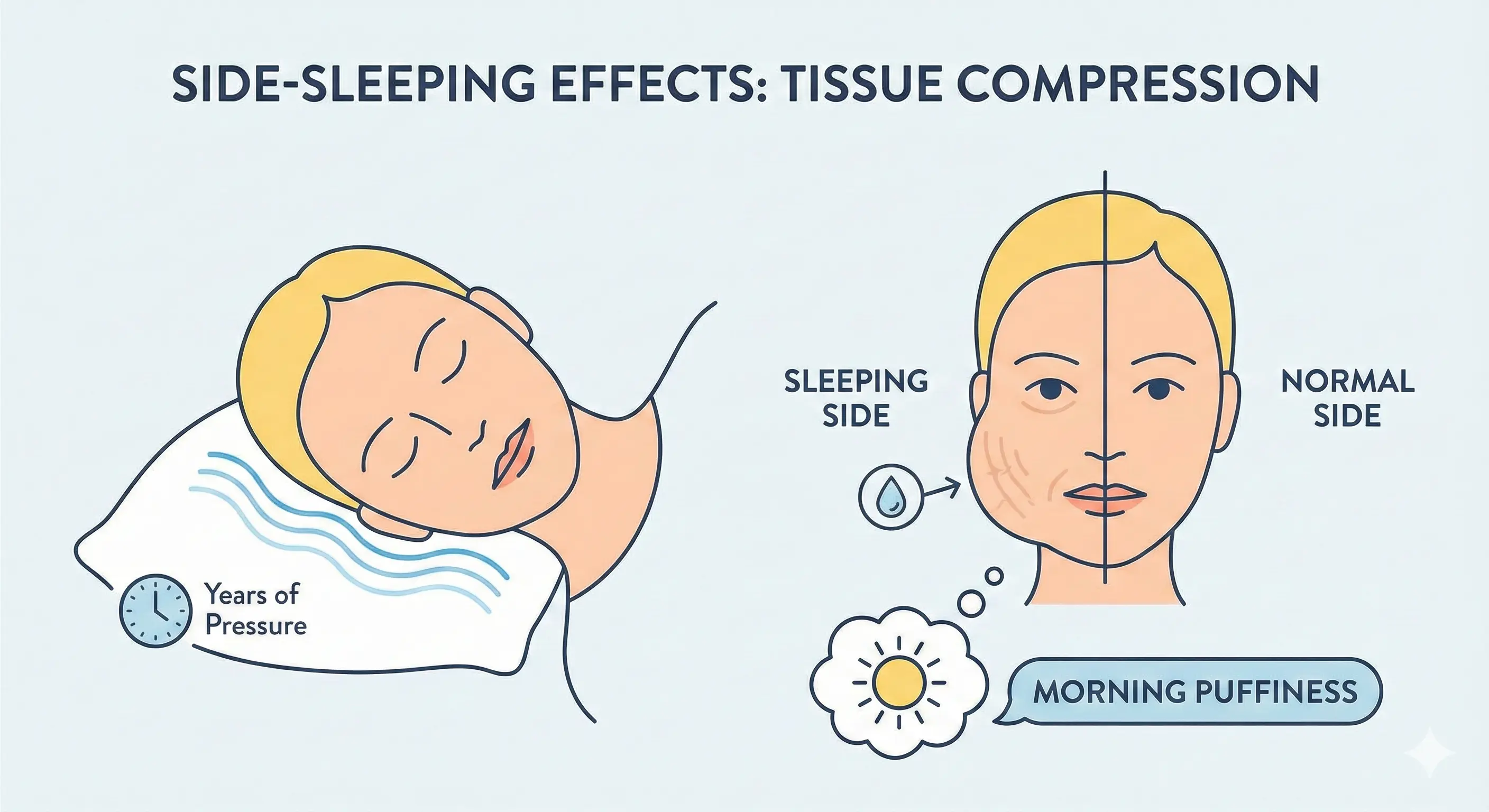 What's happening: Years of sleeping on the same side has caused tissue compression, fluid buildup, or gradual soft tissue displacement.
Why it happens:
- You've slept on one side for years (or decades)
- That side spends 6-8 hours per night under pressure
- Lymphatic drainage gets sluggish on the compressed side
How to spot it:
- The puffiness is worse in the morning and reduces slightly throughout the day
- When you think about it, you realize you always sleep on that side
- The affected side might also have more pillow creases or skin texture differences
What Face Symmetry Test shows: Try testing in the morning vs. evening. If your scores improve by evening, sleep compression is likely a factor.
Type D: Bone Structure Differences
What's happening: Your facial bones — cheekbones, jawbone, or skull — developed slightly asymmetrically.
Why it happens:
- Genetics
- Developmental factors during childhood
- Previous injury or dental issues affecting jaw growth
How to spot it:
- The asymmetry has been there since your teenage years
- It doesn't change with weight loss or lifestyle changes
- When you feel along your jawbone or cheekbone, one side feels structurally different
This type can't be fixed with exercises or habit changes. If it significantly affects you, professional evaluation is the path forward. For a complete overview of non-surgical and surgical options, read our guide on How to Fix Face Asymmetry.
Type E: Temporary Fluid Retention (Bloating)
What's happening: One side of your face is holding more water than the other — temporarily.
Why it happens:
- High sodium meal the night before
- Alcohol consumption
- Poor sleep
- Sleeping on one side (combines with Type C)
- Hormonal fluctuations
How to spot it:
- The asymmetry varies day to day — sometimes left side is puffier, sometimes right
- It's worst in the morning
- You can connect it to what you ate, drank, or how you slept
What Face Symmetry Test shows: Your scores will fluctuate significantly between tests taken on different days.
This is the easiest type to fix. A proper de-bloating protocol works within 72 hours. Check out the step-by-step method in our How to Decrease Face Fat guide.
How to Fix Your Uneven Face Based on Your Type
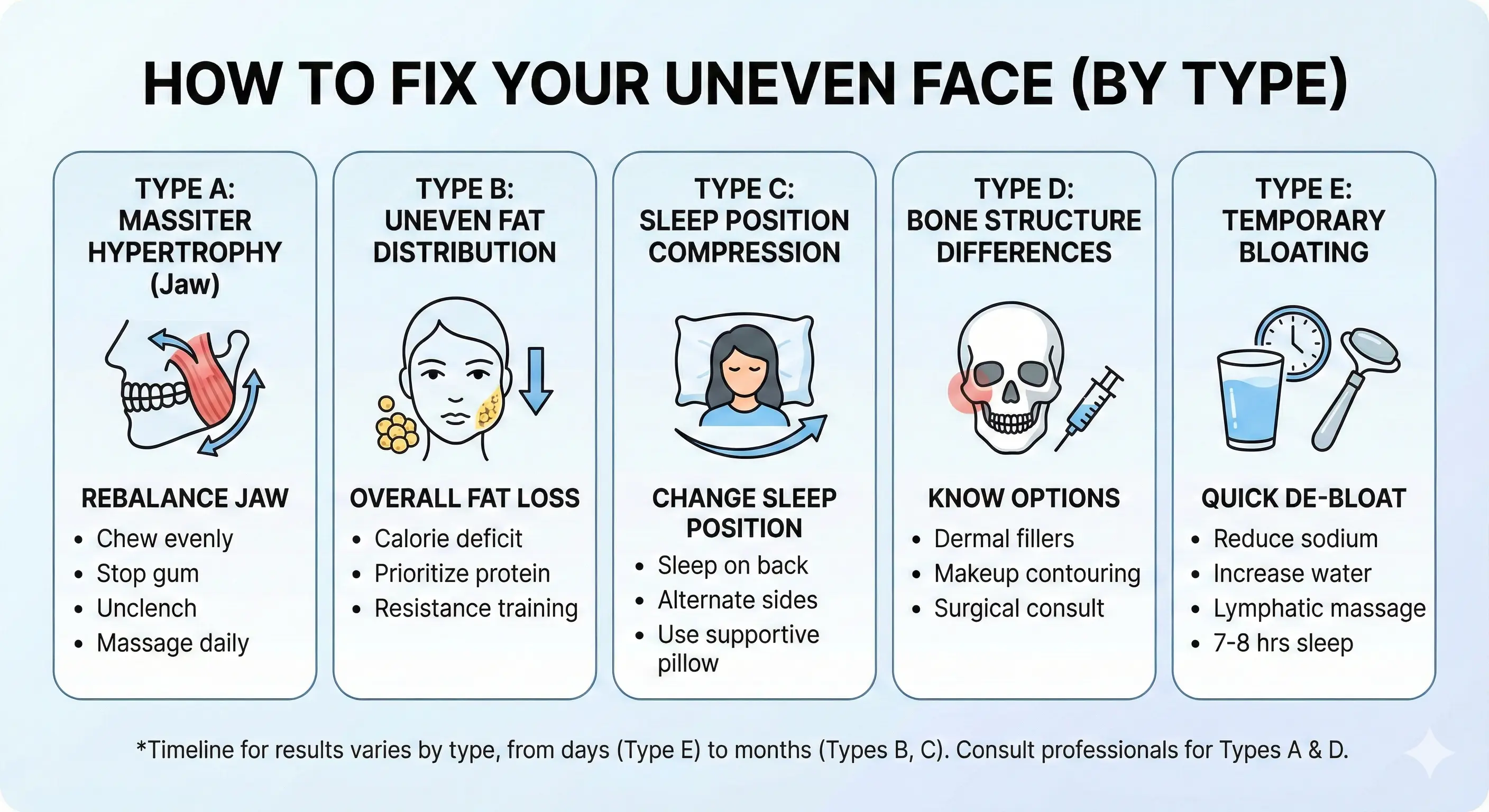
Now for the part you've been waiting for. Here's what actually works — matched to each type.
For Masseter Hypertrophy (Type A): Rebalance Your Jaw Muscles
This is the most common cause, and fortunately, it responds well to habit changes.
Immediate changes to make:
-
Chew on both sides — This sounds simple, but it requires conscious effort. For every bite of food, alternate which side you chew on. It feels awkward for the first week, then becomes automatic.
-
Stop chewing gum — Gum keeps your masseter working constantly. If you chew gum regularly, this alone could be causing your asymmetry.
-
Unclench your jaw right now — Seriously, check. Are your teeth touching? They shouldn't be when your mouth is at rest. Your lips should be closed, but teeth slightly apart.
Daily masseter release massage (2-3 minutes):
- Place your fingertips on the bulky part of your jaw muscle (you'll feel it when you clench)
- Apply firm pressure and make small circles
- Work from the corner of your jaw up toward your cheekbone
- Do both sides, but spend an extra 30 seconds on the larger side
- Best time: before bed, when jaw tension is highest
For faster results: Masseter Botox injections can reduce the muscle size more dramatically. One side can be treated more than the other to create balance. This requires a qualified professional and typically costs $300-600 per session.
Timeline: Habit changes take 4-8 weeks to show visible results. Botox results appear in 2-4 weeks.
For Uneven Fat Distribution (Type B): Overall Fat Loss
I'll be direct: you cannot lose fat from just one cheek. Anyone selling you "targeted cheek fat loss" is lying.
What you can do:
- Create a moderate calorie deficit (300-500 calories below maintenance)
- Prioritize protein intake (0.7-1g per pound of bodyweight)
- Add resistance training to preserve muscle while losing fat
- Be patient — facial fat is often the last to go
Most people notice visible face changes after losing 5-10% of their body weight. As overall fat decreases, the difference between your two cheeks becomes less noticeable.
For a complete fat loss protocol designed with facial appearance in mind, see How to Decrease Face Fat.
For Sleep Position Compression (Type C): Change How You Sleep
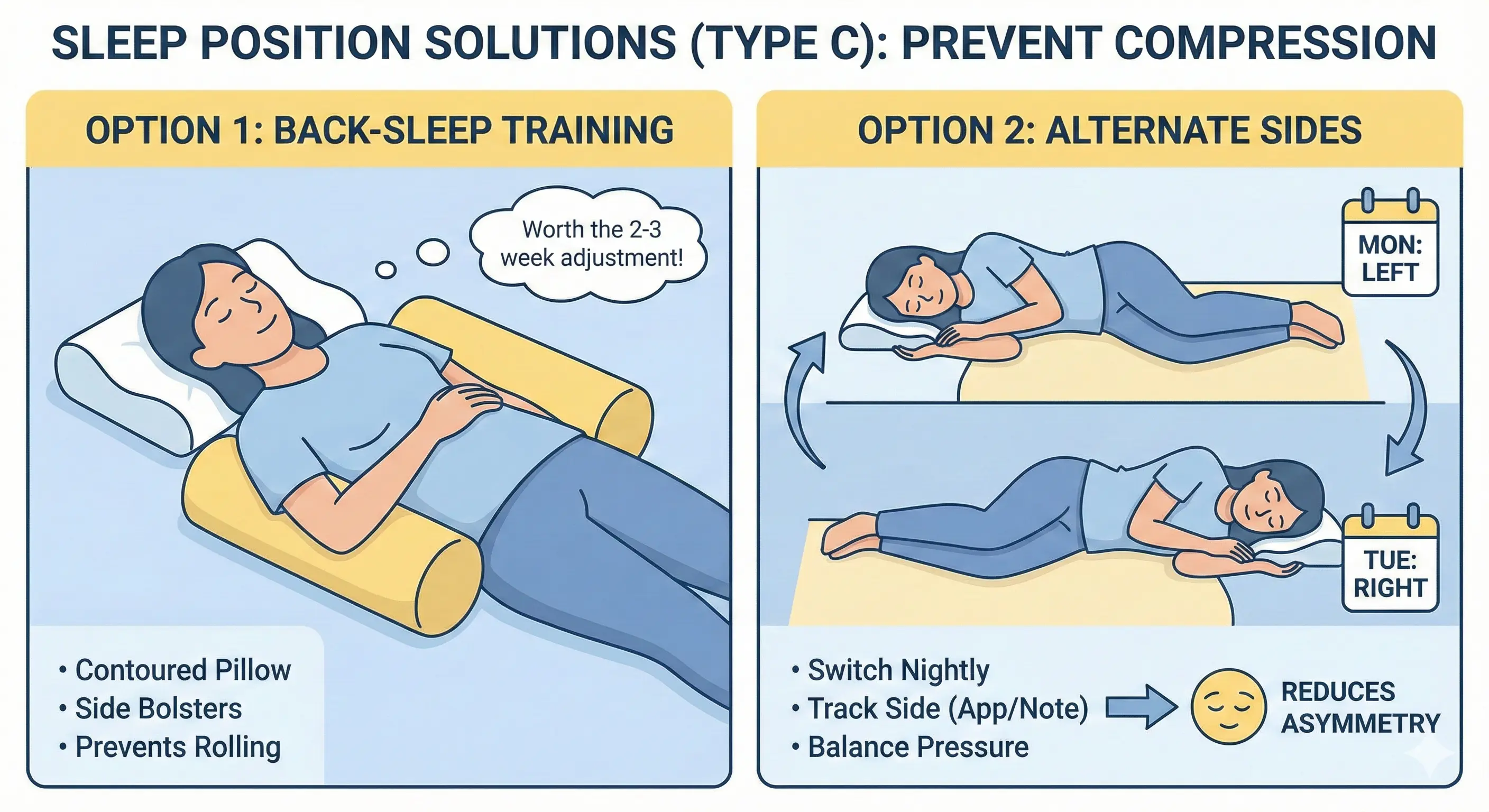 Your face spends one-third of your life pressed against a pillow. That adds up.
Option 1: Train yourself to sleep on your back
- Use pillows on both sides of your body to prevent rolling
- Try a contoured pillow that keeps your head in place
- It takes 2-3 weeks to adjust, but it's worth it
Option 2: If you can't back-sleep, alternate sides
- Consciously switch which side you sleep on each night
- Use a tracking app or simple note to remember which side you used
Pillow matters:
- Too soft = your face sinks in and gets compressed
- Look for medium-firm support
- Silk or satin pillowcases reduce friction and creasing
Timeline: Puffiness improvements in 2-4 weeks. Soft tissue redistribution may take 3-6 months of consistent change.
For Bone Structure (Type D): Know Your Options
If your asymmetry is skeletal, lifestyle changes won't reshape your bones. But that doesn't mean you're stuck.
Non-invasive options:
- Strategic use of dermal fillers can add volume to the smaller side, creating visual balance
- Makeup contouring techniques
Surgical options:
- Jaw surgery (orthognathic surgery) for significant skeletal asymmetry
- Chin or cheek implants
- Fat grafting to balance volume
These decisions require professional consultation. For a comprehensive breakdown of all options, read How to Fix Face Asymmetry.
For Temporary Bloating (Type E): The Quick Fix
Good news — this type resolves fastest.
72-hour de-bloat protocol:
- Reduce sodium to under 1,500mg daily
- Drink 3+ liters of water (counterintuitive but it works)
- No alcohol
- Get 7-8 hours of sleep
- Morning lymphatic massage: gentle strokes from center of face outward and downward toward neck
After 72 hours, retest with Face Symmetry Test. If your scores improved significantly, bloating was your main issue.
Full protocol details are in How to Decrease Face Fat.
Real Story: How Sarah Fixed Her Uneven Jawline
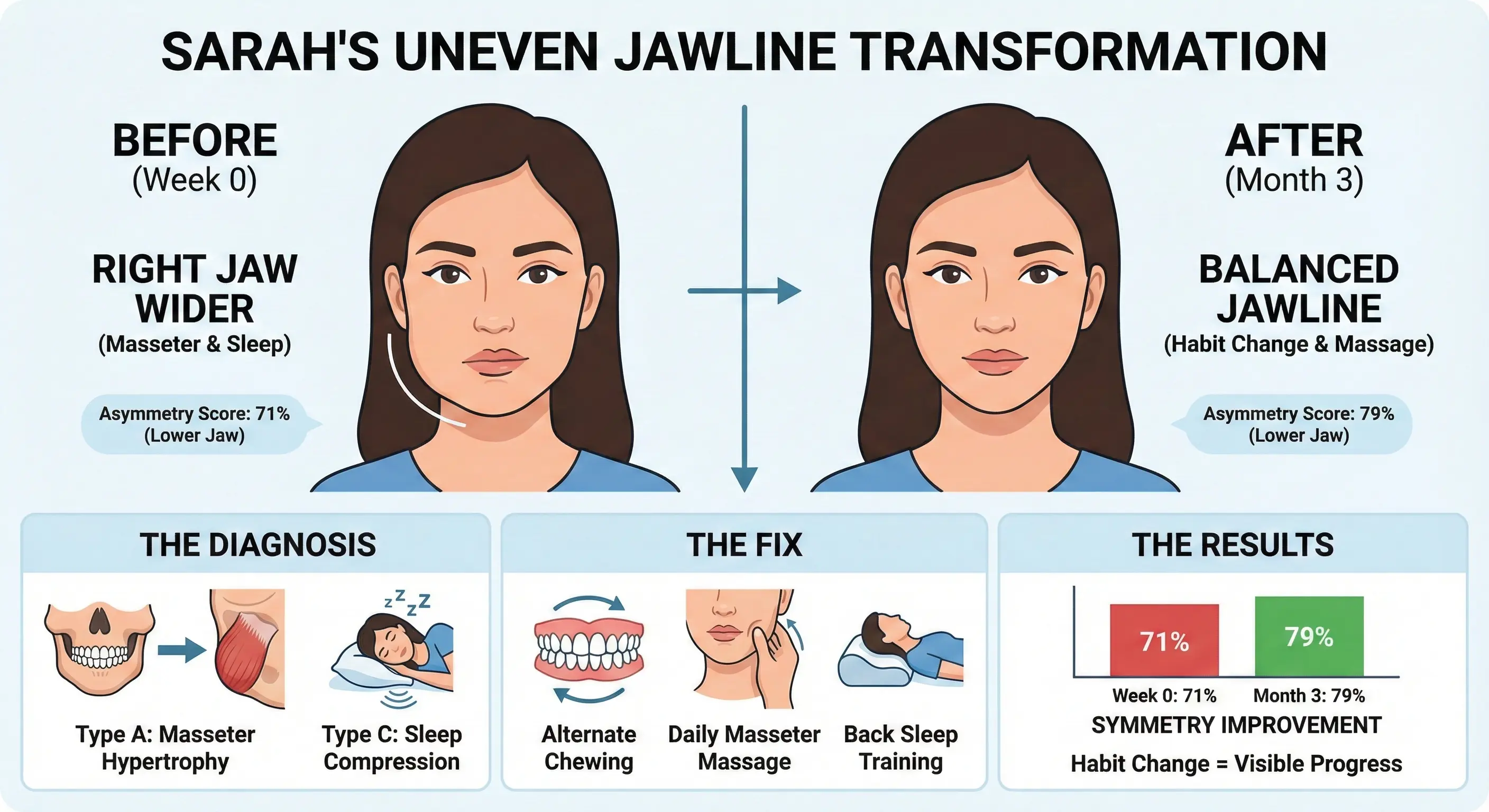 Let me share a case that ties this all together.
The problem:
Sarah, 32, noticed in photos that her right jaw looked noticeably wider than her left. She'd been hiding it by always angling her left side toward the camera. When she took a Face Symmetry Test, her overall score was 82% — but her lower jaw region was only 71%.
She assumed it was her bone structure and started researching jaw surgery.
The diagnosis:
Before booking a surgical consultation, she did the self-tests from this article:
- Clenched her teeth and felt both sides — right masseter was significantly larger and harder
- Thought about her chewing habits — realized she'd chewed almost exclusively on her right side for over a decade
- Considered her sleep position — almost always slept on her right side
Her type: Masseter hypertrophy (Type A) + Sleep compression (Type C)
Not bone. Muscle and habit.
What she did:
- Switched to alternating-side chewing (felt weird for 2 weeks, then became natural)
- Added 2-minute masseter massage every night before bed
- Bought a contoured pillow and trained herself to sleep on her back
The results:
- Week 6: Started noticing her jaw felt less tight on the right side
- Month 2: Friends commented that she looked "different" but couldn't pinpoint why
- Month 3: Retested with Face Symmetry Test — lower jaw region improved from 71% to 79%
- Side-by-side photos showed clear visible improvement
Her key insight: "I was ready to spend thousands on surgery for something that was actually a habit problem. The test scores gave me objective proof that I was making progress."
3 Mistakes That Make Your Lopsided Face Worse
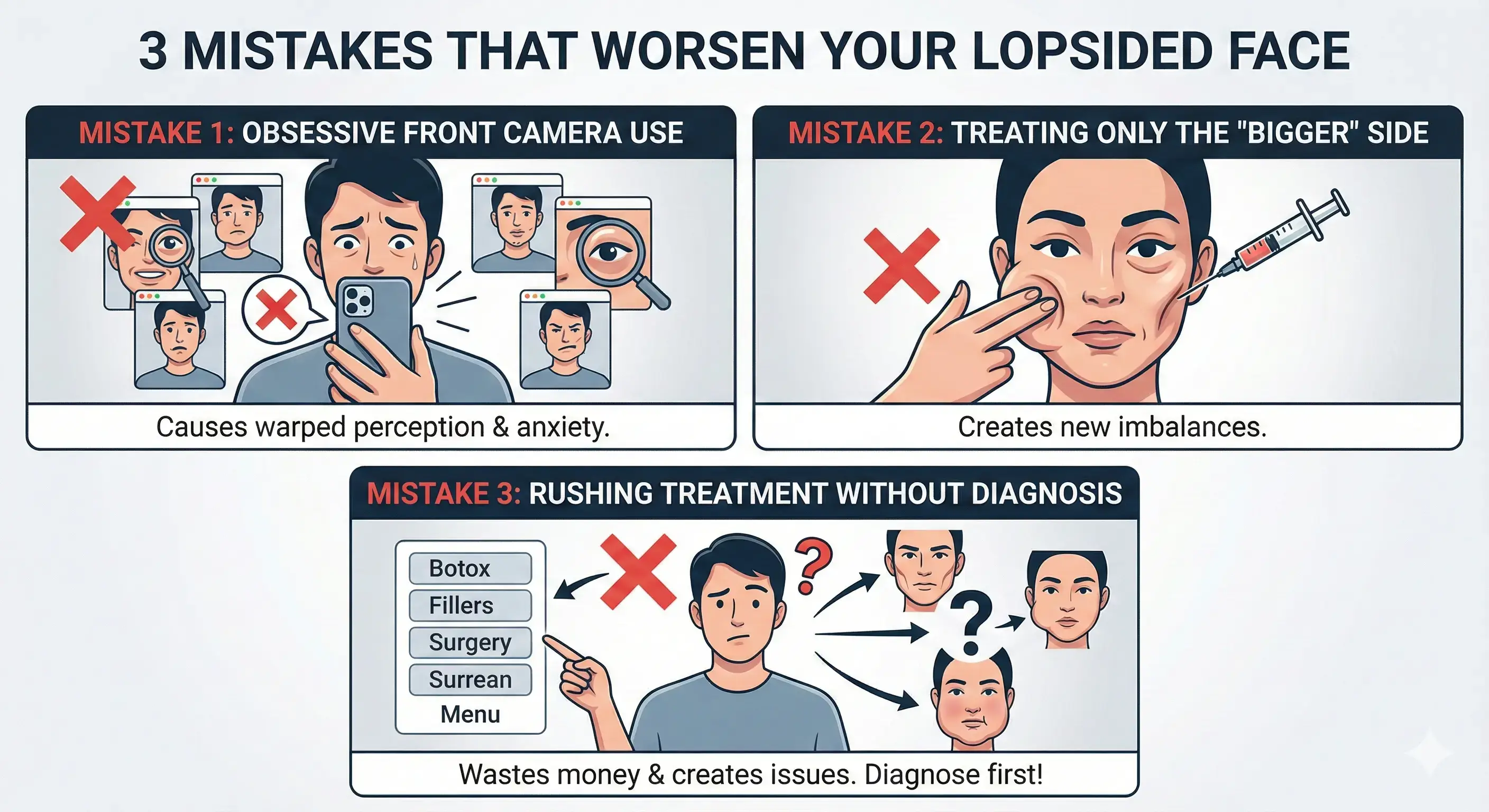 As you work on this, avoid these common traps:
Mistake 1: Obsessively Checking with Your Front Camera
The more selfies you take, the more anxious you get. And remember — that front camera is distorting your face anyway.
The problem: You take 50 selfies, analyze every angle, compare screenshots, zoom in until every pore is visible. This creates a warped perception of how you actually look.
Reality check: Other people see you from 1-2 meters away, in motion, with natural expressions. Not frozen at 20cm in harsh bathroom lighting.
Better approach: Limit yourself to weekly progress photos using the rear camera from a consistent distance. Or use Face Symmetry Test for objective measurements instead of subjective selfie-staring.
Mistake 2: Only Treating the "Bigger" Side
It seems logical — if one side is bigger, just focus on that side, right?
The problem: Asymmetrical treatment can create new imbalances. If you only massage one cheek or only exercise one side of your face, you might overcorrect.
Better approach: Do your exercises and massages on both sides. You can spend slightly more time on the larger side (an extra 30 seconds to a minute), but don't neglect the other side entirely.
Mistake 3: Rushing to Treatment Without Knowing Your Type
I've seen people get masseter Botox when their issue was actually bloating. Or pursue expensive fillers when the real problem was sleep-related swelling that would've resolved for free.
The problem: You waste money, time, and sometimes create new issues — all because you didn't diagnose correctly first.
Better approach: Use the self-tests in this article. Get a baseline with Face Symmetry Test. Try the appropriate lifestyle changes for 4-6 weeks. Then evaluate whether professional treatment is needed.
Your 3-Step Action Plan — Start Today
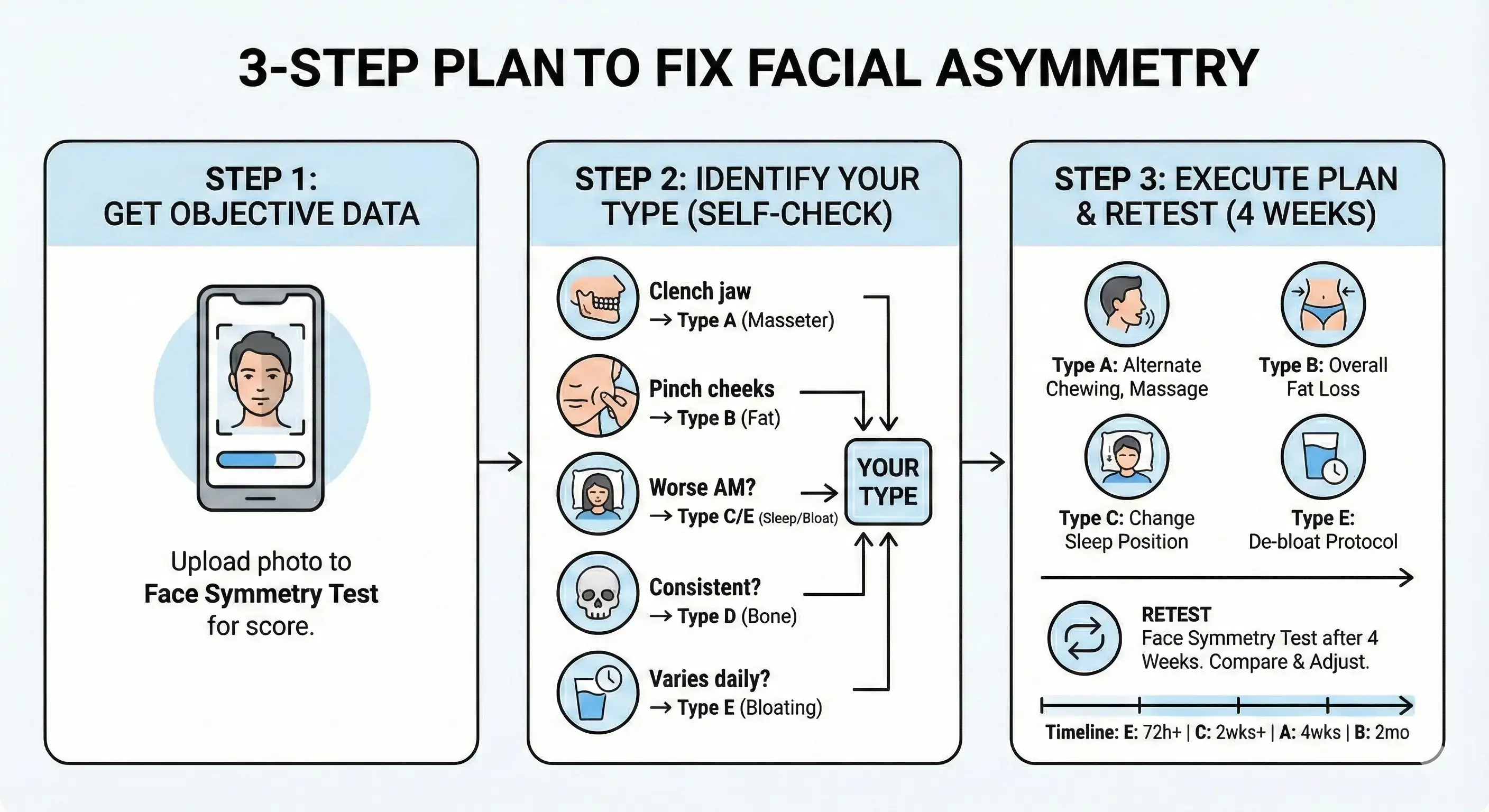 Here's exactly what to do next:
Step 1: Get Objective Data (Do This Now)
Stop guessing. Upload a clear, front-facing photo to Face Symmetry Test.
You'll learn:
- Your overall symmetry percentage
- Which specific areas (eyes, cheeks, jaw) are most asymmetrical
- Whether your concerns match the actual measurements
This takes 30 seconds and gives you a baseline to track improvement.
Step 2: Identify Your Type (Do This Today)
Based on your test results and these self-checks:
| Self-Test | What to Look For | Likely Type |
|---|---|---|
| Clench teeth, feel both sides of jaw | One side harder/bigger | Type A (Masseter) |
| Pinch both cheeks | One side has more soft fat | Type B (Fat distribution) |
| Compare morning vs. evening | Worse in morning, improves by night | Type C (Sleep) or E (Bloating) |
| Think about consistency | Same since teenage years, never changes | Type D (Bone structure) |
| Varies day to day | Sometimes left, sometimes right | Type E (Bloating) |
Most people have a combination — often Type A with some Type C or E.
Step 3: Execute Your Plan for 4 Weeks, Then Retest
Based on your type:
- Type A → Alternate-side chewing + daily masseter massage
- Type B → Start overall fat loss plan
- Type C → Change sleep position
- Type E → Complete 72-hour de-bloat protocol first
After 4 weeks, take Face Symmetry Test again. Compare your scores. Adjust your approach based on what's working.
Expected timeline:
- Bloating (Type E): Improvement within 72 hours to 1 week
- Sleep compression (Type C): 2-4 weeks for puffiness, 3-6 months for tissue changes
- Masseter (Type A): 4-8 weeks for noticeable change
- Fat distribution (Type B): 2-3 months with consistent fat loss
📖 This article is part of our Complete Guide to Face Symmetry
The Bottom Line
One side of your face being slightly larger than the other is incredibly common. Research suggests that virtually no one has a perfectly symmetrical face. The question isn't "am I asymmetrical?" — it's "is my asymmetry something that can be improved, and how?"
Here's what we covered:
- First, rule out camera distortion — Your front camera lies. Get an objective measurement.
- Identify your type — Masseter muscle, fat distribution, sleep position, bone structure, or temporary bloating. Different causes need different solutions.
- Take targeted action — Match your approach to your type. Don't waste time on solutions that don't address your specific issue.
- Track your progress — Use objective measurements, not endless selfie analysis.
Most facial asymmetry — especially the "one cheek looks fatter" kind — comes from habits and soft tissue, not bone structure. That means most of it can be improved without surgery, without expensive treatments, just by adjusting what you do every day.
And here's the perspective shift that matters most: other people don't see your face the way you see it. They see you in motion, from a normal distance, as a whole person — not a frozen close-up with every asymmetry highlighted.
Your face is almost certainly more balanced than your front camera suggests.
Ready to find out for sure? Test Your Face Symmetry Now →